


 Erik Bjornstad
Everybody's Doing More With Less - Even Your Local Government
 Erik Bjornstad : Mar 23 2026
Local governments are turning to preventive maintenance to manage tight budgets, focusing on proactive fuel system management to ensure reliability...
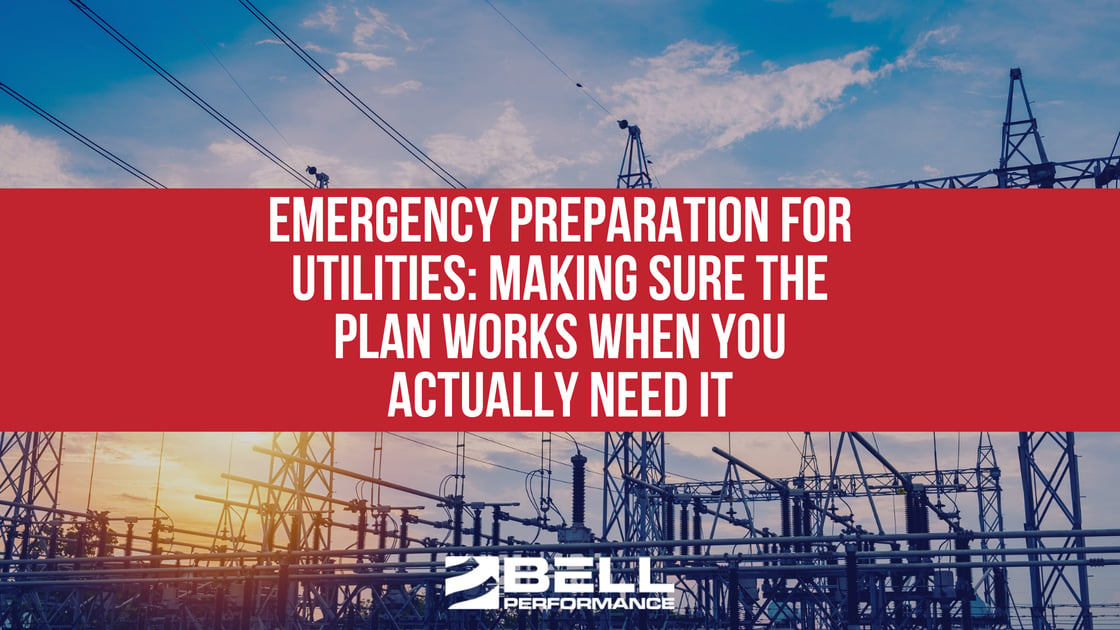
If you work for an electric, water, or wastewater utility, an emergency creates a somewhat unusual situation. For a lot of businesses, when the power goes out or a major storm comes through, operations may slow down or even stop. But utilities don't really have that option.
In fact, it's almost the opposite.
As I said on the podcast, “Your job doesn't stop when the power goes down. In fact, your job actually ramps up when the power goes out.”
People still need electricity. They still need clean water. Wastewater still has to go somewhere. Hospitals, emergency communications systems, traffic controls, and other critical infrastructure still have to operate. So emergency preparation for utilities isn't just about having an emergency plan sitting in a binder somewhere. It's about knowing that your equipment, your fuel, and your people can actually do what you're expecting them to do when something goes wrong.
And there are several places where utilities can find out, sometimes at the worst possible time, that what looked good on paper doesn't necessarily work in the real world.
One of the first places I would look is backup fuel.
Utilities can have diesel sitting in storage for months at a time, sometimes in very large tanks, waiting for the day when it is needed. The problem is that the fuel doesn't stop changing just because nobody is using it.
Water can get into the tank. Microbial growth can develop. Sediment can accumulate. The fuel itself can degrade over time. And unlike a lot of other equipment problems, you may not get an alarm telling you that any of this is happening.
You may not find out until the power goes down, the generator starts like it's supposed to, and then ten minutes later it shuts down because it can't get good fuel.
That's why I made the point in the podcast that “the fuel is usually the weak link and it's an avoidable problem.”
Fuel testing shouldn't be something that suddenly becomes important on June 1 because hurricane season has arrived, or because somebody looked at the weather forecast and realized a major storm might be coming. It needs to be part of your routine throughout the year.
That includes the tanks everybody remembers, but it also includes the ones people tend to forget. Utilities may have remote substations, unattended lift stations, pump houses, and other facilities scattered across a county or service area. Those remote tanks can be especially easy to overlook.
The basic idea is pretty simple: know what's in your tanks before you need what's in your tanks.
The next issue is the generator itself.
A lot of organizations will exercise a generator by starting it, letting it run for a while, shutting it down, and checking the box. The generator started, so the generator works.
Except that isn't really the question you need answered.
The question is what happens when the grid actually goes down, and that generator has to carry the equipment you're depending on it to carry.
As I put it in the episode, emergency preparation “is not just about whether the generator starts; it's about whether it will hold up under full load, whether it transfers cleanly, powers critical systems, and runs long enough to do its job.”
That means testing the entire system.
For an electric utility, that can mean black-start capability, automatic transfer switches, substations, SCADA and communications systems, and failover from one part of the system to another. For water and wastewater utilities, it can mean pumps, lift stations, chemical dosing systems, and remote facilities.
One of the easiest things to overlook is the automatic transfer switch, or ATS. Your generator can be running perfectly, but if the ATS doesn't transfer the load, your facility can still be sitting there in the dark.
It's a good example of something I talked about throughout the episode: “It's a small box that controls a pretty big outcome.”
The point isn't simply to test the individual pieces. You want to test what happens when all those pieces have to work together.
Then there is another pretty basic question that isn't always easy to answer: how much fuel do you actually need?
You can't answer that by looking at the capacity of the tank alone. You need to know your real fuel burn rate, what happens to that burn rate under peak load, and which equipment is going to be operating during an extended outage.
For the most critical sites, the episode discusses planning around at least 72 to 96 hours of operation at full load.
And you have to look beyond headquarters or the main treatment plant.
A water system may have plenty of backup power at the treatment plant but still have a serious problem if remote pump stations can't keep water moving. A wastewater system may have a generator at its main facility but still have sewage backing up because a lift station lost power. An electric utility has to think about the substations and control centers serving hospitals, emergency communications, evacuation routes, and other critical loads.
So figure out your actual burn rates. Figure out what absolutely has to remain online. Then ask yourself a very practical question: if fuel trucks cannot get to us for two, three, or four days, what happens?
That's the number you really need to know.
That leads directly into fuel logistics.
During a major regional emergency, you aren't going to be the only organization looking for diesel fuel. Your supplier may have plenty of customers calling at exactly the same time, while dealing with blocked roads, damaged bridges, curfews, driver shortages, and problems at terminals or loading racks.
So this is another area where the planning has to happen beforehand.
Utilities should know who their primary fuel supplier is, but they should also know what happens if that supplier can't deliver. They need backup options. Suppliers need accurate delivery locations and site contacts. They need to know where the priority access points are and whether there are alternate routes into a facility.
Utilities should also be connected to the larger emergency-response structure available to them. For water and wastewater utilities, that can include the state's Water/Wastewater Agency Response Network, or WARN, which can help coordinate mutual aid such as fuel, generators, pumps, and even licensed personnel. State emergency fuel coordination programs can also become important when available fuel has to be prioritized among critical infrastructure.
The time to figure out how those systems work is not when the phones are jammed, and the roads are already washed out.
Emergency preparation also means looking at the physical vulnerabilities in your system.
Where are your generators located? Where are your tanks? What happens if that area floods? What happens if a wildfire makes a remote site inaccessible? What happens if a tree comes down across the only road leading to an important pump station?
The answers are going to be different depending on where you operate and what kinds of emergencies you face. A utility along the Gulf Coast is going to think a lot about hurricanes and flooding. A utility in the West may have a very different set of concerns involving wildfire and public-safety power shutoffs.
But the basic question is the same: where are the weak spots?
The important thing is to identify them while you still have time to do something about them, rather than letting the next emergency identify them for you.
Equipment is only one side of emergency preparation. The people who have to execute the plan matter just as much.
That's where tabletop exercises can be extremely useful.
A tabletop exercise doesn't have to be particularly complicated. Pick a realistic scenario and start walking through what happens. Maybe grid power is lost during a wildfire. Maybe a substation goes down at the same time you're having trouble getting fuel. Maybe communications fail. Maybe an ATS doesn't transfer.
Then start asking questions.
Who gets notified? Who is monitoring the fuel? Who has authority to call the supplier? What happens if the normal supplier can't get there? What if a remote site becomes inaccessible? What if the satellite phone doesn't connect? What if the generator works but the transfer switch doesn't?
The point isn't to pass or fail the exercise. The point is to expose assumptions.
One of the examples from the episode was an ATS failure. The generator may be running just fine, but the facility remains without power because the switch never transfers the load. Unless you have real-time monitoring, you may not even immediately know that happened.
Once you've identified those kinds of problems, don't leave them sitting on somebody's legal pad.
Figure out what worked, what didn't work, and what needs to change. Assign somebody responsibility for fixing it and give that person a deadline.
Because, as I said in the episode, “Tabletop drills only help if they lead to action.”
Documentation may not be the most exciting part of emergency preparation, but after an emergency it can become one of the most important.
That documentation can include generator testing, fuel testing, maintenance, load-transfer capability, emergency exercises, after-action reports, and the corrective actions that came out of those exercises.
Depending on the type of utility, there may also be regulatory requirements involved. Electric utilities may be dealing with FERC and NERC requirements, including NERC emergency-operations standards such as EOP-005 for system restoration and EOP-011 for emergency operations planning. Water and wastewater systems may be dealing with EPA requirements and emergency-response planning under the America's Water Infrastructure Act.
But even apart from compliance, good documentation is useful operationally.
You want to know what was tested, what happened, what failed, and whether somebody fixed it. You don't want that information scattered across pieces of paper or stored only in the head of the employee who has worked there for 25 years.
As I said on the podcast, “If you can't show it on paper or on screen, then it didn't happen in the eyes of those people who are checking.”
That brings us to one last area that can sound almost too basic: knowing where your critical equipment actually is.
For utilities with geographically dispersed operations, that isn't necessarily as easy as it sounds.
Fuel tanks, day tanks, generators, transfer switches, and communications equipment may be spread across dozens of sites. And if the person who knows where everything is happens to be off shift—or you're bringing in mutual-aid crews from outside the area—“ask Bob, he knows where it is” isn't much of an emergency plan.
Critical fuel and backup-power infrastructure should be mapped and, ideally, digitized. Locations can be GPS-tagged, and the information should be available in a form that crews can still access if normal communications or network access goes down.
That matters because during an emergency people need to know where to go, what they're looking for, which tanks need fuel and which sites have to be kept online first. For geographically dispersed utilities, the right map may end up being almost as important as some of the equipment itself.
There is a common thread running through all of this.
Emergency preparation isn't really about having a plan. It's about knowing whether the plan works.
Is the fuel good? Will the generator carry the load? Will the transfer switch work? Do you have enough fuel to run for several days? Can somebody bring you more? Can your crews get to the equipment? Does everybody know what they're supposed to do? And when you find a problem, does somebody actually fix it?
Those are much more useful questions than whether every box on an emergency-preparedness checklist has been checked.
Because when the emergency actually arrives, the plan stops being theoretical.
As I said at the end of the episode, “When disaster hits, you need to know that your system's gonna run.” Your people need to know the plan; they need to be able to execute it, and afterward they need to be able to help make it better for the next time.
That's really what utility emergency preparation comes down to: finding the problems now, while you still have the time and the ability to do something about them.

 Erik Bjornstad : Mar 23 2026
Local governments are turning to preventive maintenance to manage tight budgets, focusing on proactive fuel system management to ensure reliability...
 Erik Bjornstad : Nov 6 2025
Preventive fuel maintenance is crucial to avoid costly damage and downtime. Learn essential strategies to protect your stored fuel and ensure system...
 Erik Bjornstad : Aug 25 2026
Understand NFPA 110 requirements for stored generator fuel, including testing, fuel quality, and maintenance to ensure compliance and optimal...
Leave a Comment
Have a question or something to add? Share your thoughts below.