


 Erik Bjornstad
Do Fuel Additives Really Work? How to Know
 Erik Bjornstad : Jun 18 2026
Discover how fuel additives can benefit your vehicle when matched to specific problems. Learn to assess effectiveness and make informed choices.
You've been putting the same grade of gas in your car for years, doing everything the manual says, and something still feels off. The engine doesn't pull the way it used to. The fuel gauge drops faster than it should. Maybe you've noticed rough idling at a stoplight, or a slight hesitation on acceleration that wasn't there before.
Quick Answer
Quality fuel additives do work — but only when they use proven chemistry matched to a real problem. A legitimate additive improves combustion, cleans injectors and combustion chambers, or protects fuel from ethanol and degradation. Products that claim to double your mileage overnight don't. The difference comes down to chemistry, concentration, and realistic expectations.
So you go looking for a fuel additive — and suddenly you're staring at a shelf full of products making wildly different claims, with no clear way to know which ones are legitimate and which are marketing dressed up as chemistry.
The skepticism is reasonable. The fuel additive market genuinely has bad actors who've trained consumers to distrust everything. What this guide gives you is a clear framework for how fuel additives work in practice, what they can and can't accomplish, and how to identify the products worth your money.
Yes — the right ones do, through two well-established mechanisms: combustion catalysis and detergency. A combustion catalyst helps fuel burn more completely, extracting more energy from each injection event. A detergent removes the carbon deposits, varnish, and gum that build up on injectors, intake valves, and combustion chamber surfaces over time. Both matter. An additive that only does one will give you a fraction of the benefit.
What doesn't work is a product built on magical thinking — magnets to "align fuel molecules," alcohol to "absorb water" (you don't solve an alcohol problem with more alcohol), or a one-shot bottle promising 25% better mileage. Those products exist because outrageous claims sell. They're the reason legitimate fuel chemistry gets lumped in with snake oil.
Bell Performance has been making fuel additives since 1909 — longer than most car companies have existed. That history comes with a clear understanding of what fuel chemistry can and cannot do, and a commitment to making claims that hold up.
Combustion efficiency degrades because engines get dirty — that's the root cause of most performance and fuel economy losses in otherwise healthy vehicles. When fuel burns in your engine, it leaves behind trace deposits of carbon, varnish, and gum. Over tens of thousands of miles, those deposits accumulate on injector tips, narrowing the spray pattern; on intake valves, disrupting airflow; and inside combustion chambers, acting as insulation that robs you of heat energy.
A new engine operates near its designed efficiency ceiling. The further it moves from that condition, the more fuel it burns to produce the same power. Detergent-based fuel additives work by dissolving and removing those accumulated deposits, moving the engine back toward the condition it was in when it left the factory. That's not magic — that's maintenance chemistry.
There's a counterintuitive signal that tells you a detergent additive is doing its job: your mileage will briefly drop when you first use it. That's not a failure — it's the cleaning cycle in progress.
Here's why it happens. Carbon deposits that have built up over years are being dislodged and burned off along with your normal fuel. Those deposits don't combust as cleanly as pure fuel, which causes a temporary dip in efficiency. Once the cleaning cycle is complete — and the length depends on how dirty your engine was — mileage rises and settles at whatever gain the additive provides for your specific engine.
Two practical tracking tips: don't rely on your car's onboard mileage computer during this period, since it typically displays an average calculated before you made any changes. Track it manually instead, filling to the same spot at the same pump and recording miles driven under similar conditions. The data you collect yourself will be more reliable than anything a dashboard number shows you.
A fuel additive working at the chemical level should deliver measurable but modest results: cleaner injectors, better combustion efficiency, and protection against the specific problems your fuel type creates. Expecting 6–10% better fuel economy from a quality additive in a dirty engine is reasonable. Expecting 25% or 50% better mileage from any additive is not.
Red flags worth knowing on sight:
The other marker of a trustworthy product is cost per gallon treated, not cost per bottle. A $9 bottle that treats a single 12-gallon fill-up costs 75 cents per gallon. A $15 bottle that treats 128 gallons at a 1:1000 ratio costs about 12 cents per gallon. Concentrates almost always deliver better value when you do the math.
The answer depends on what your fuel is, where it goes, and what problem you're solving. Here's the practical breakdown:
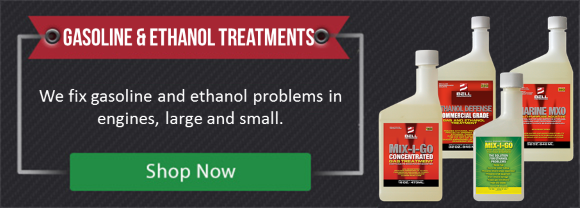
Mix-I-Go is Bell's original gasoline treatment, developed in 1927 and continuously refined since. It combines a combustion catalyst with deposit-control detergency to clean injectors and combustion chambers while improving fuel efficiency. It's the right choice for general maintenance in any gasoline-powered vehicle.
Ethanol Defense addresses the specific chemistry problems ethanol creates: phase separation (where the ethanol-water mixture separates from the gasoline and drops to the bottom of the tank), corrosion from water contact with metal components, and softening of rubber seals and fuel system parts.
The key distinction: Ethanol Defense uses professional-strength water absorbers that work without adding alcohol. Every product that claims to control ethanol-related water by adding isopropanol or methanol is, by definition, adding more of the problem. Ethanol Defense doesn't.
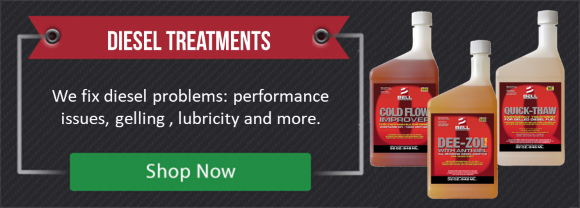
Dee-Zol handles the full range of diesel fuel problems in one treatment: cetane improvement (by 3–5 points, which directly affects ignition quality and power), injector cleaning, water control, and fuel stabilization to prevent oxidative degradation — the chemical process where diesel fuel breaks down in storage and forms gum and sediment.
Classic cars built before the mid-1980s weren't designed for the ethanol blends that now dominate pump gas. The carburetor gaskets, rubber fuel lines, and metal tank linings in those engines are far more reactive to ethanol solvency than the materials used in modern fuel systems — and the damage accumulates quietly. You may not notice anything until a seal swells, a rubber line softens, or phase-separated fuel leaves water sitting in a tank that was never meant to handle it.
Two things matter here. First, Ethanol Defense at every fill-up provides the corrosion protection and water-tolerance chemistry those original fuel system materials need. Second, if you're running a carbureted engine, the deposits that accumulate inside a carburetor behave differently from injector deposits — they restrict the small passages and jets that the carburetor depends on for correct fuel metering. Mix-I-Go addresses both, keeping fuel system internals clean and providing combustion improvement without disturbing the tune your carburetor was set up for.
If you're managing a collection, storing vehicles seasonally, or running a car with an original fuel tank, the complete guide to classic car fuel covers the specific risks and how to protect against them.
| Application | Product | Treat Ratio | Notes |
|---|---|---|---|
| Gasoline — cars, trucks, SUVs | Mix-I-Go | 1:1000 | Use at every fill-up for ongoing deposit control |
| Gasoline with ethanol (E10, E15) | Ethanol Defense | 1:1280 (~1 oz / 10 gal) | Alcohol-free; use at every fill-up |
| Classic / pre-1985 vehicles | Ethanol Defense + Mix-I-Go | 1:1280 / 1:1000 | Protects original rubber, metal, and carburetor components |
| Small engines, lawn equipment | Mix-I-Go Small Engine | 1:1000 | Especially important with ethanol-blend pump gas |
| Marine / outboard engines | Marine MXO | 1:1000 | Mix-I-Go family; formulated for 2-cycle and 4-cycle marine |
| Diesel — vehicles and equipment | Dee-Zol | 1:1000 | Improves cetane 3–5 points; cleans injectors |
| Stored diesel | Dee-Zol Life | 1:2000 | Add as early in storage life as possible |
| Diesel in cold weather | Cold Flow Improver | 1:1000 | Add before temps reach cloud point |
Quality fuel additives work when they use proven chemistry — combustion catalysts and detergents that clean injectors and combustion chambers — matched to a real fuel problem. Products built on legitimate chemistry from companies with decades of documented results are not the same category as the "miracle mileage" products on gas station spinner racks. The key is knowing the difference before you buy.
It depends on the additive type and your engine's condition. A detergent additive typically goes through a cleaning cycle during the first few tanks of use — you may see a brief, temporary mileage dip as accumulated deposits are being burned off. Once the cleaning cycle is complete, efficiency improves and settles at the additive's sustained benefit level. An engine with heavy deposit buildup will take longer to clean than one that's been maintained regularly.
A quality, concentrated fuel additive used at the correct treat rate will not damage your engine. The concern about engine damage applies to products containing alcohol (which attacks rubber seals and fuel system components) or products used at excessive concentrations. Always follow the treat rate on the label. Bell Performance products are formulated without harmful alcohol-based water controllers and are safe for continuous use.
Yes. Ethanol Defense uses professional-strength, alcohol-free water absorbers that prevent phase separation — the process where the ethanol and water mixture separates from the gasoline and sinks to the bottom of the tank, leaving your engine running on water-contaminated fuel. It's formulated to handle water without adding more alcohol, which is how most competing products make the problem worse while appearing to address it.
Yes, and you should — small engines are significantly more vulnerable to ethanol damage than car engines because they have more rubber and plastic components in the fuel system, they often sit with fuel in them for extended periods (accelerating phase separation), and manufacturers are slower to update them for higher ethanol blends. Mix-I-Go Small Engine Formula is designed for this application, providing deposit control and ethanol protection for any small gasoline-powered engine. See also: Generator Fuel Guide
A fuel additive is designed for regular use in operating engines — it improves combustion, cleans deposits, and treats the fuel as you burn it. A fuel stabilizer is formulated for storage — it slows the oxidative degradation process that causes gasoline to go stale (typically within 30–60 days for ethanol blends) and diesel to form gum and sediment. Some products, like Dee-Zol, do both. Others, like Dee-Zol Life, are purpose-built for storage. See also: What Does a Fuel Stabilizer Do?
A temporary mileage drop when you start using a detergent-based additive is confirmation — not a failure — that it's working. The deposits being cleaned from your injectors and combustion chambers are burning off along with your regular fuel, and they don't combust as efficiently as clean fuel. Once the cleaning cycle is complete — typically within two to four fill-ups depending on deposit levels — mileage recovers and then improves past your original baseline.
If your engine isn't running the way it used to, or you're burning ethanol-blend gasoline and want to protect your fuel system from the inside out, there's a Bell product formulated for your specific situation. Mix-I-Go for gasoline. Ethanol Defense for ethanol blends. Dee-Zol for diesel. Bell's team has been answering these questions since 1909.
 Erik Bjornstad : Jun 18 2026
Discover how fuel additives can benefit your vehicle when matched to specific problems. Learn to assess effectiveness and make informed choices.
 Erik Bjornstad : May 7 2026
Discover five common factors that can silently damage your engine over time and learn effective strategies to protect your vehicle for the long haul.
 Erik Bjornstad : Jun 9 2026
Ensure your boat's fuel stays in top condition this season. Discover essential marine fuel treatments and prevent common storage issues for optimal...
Leave a Comment
Have a question or something to add? Share your thoughts below.