


 Erik Bjornstad
How Long Does Diesel Last In A Tank?
 Erik Bjornstad : Mar 19 2026
Discover how long diesel fuel lasts in storage, factors affecting its longevity, and essential management tips to ensure optimal performance when it...
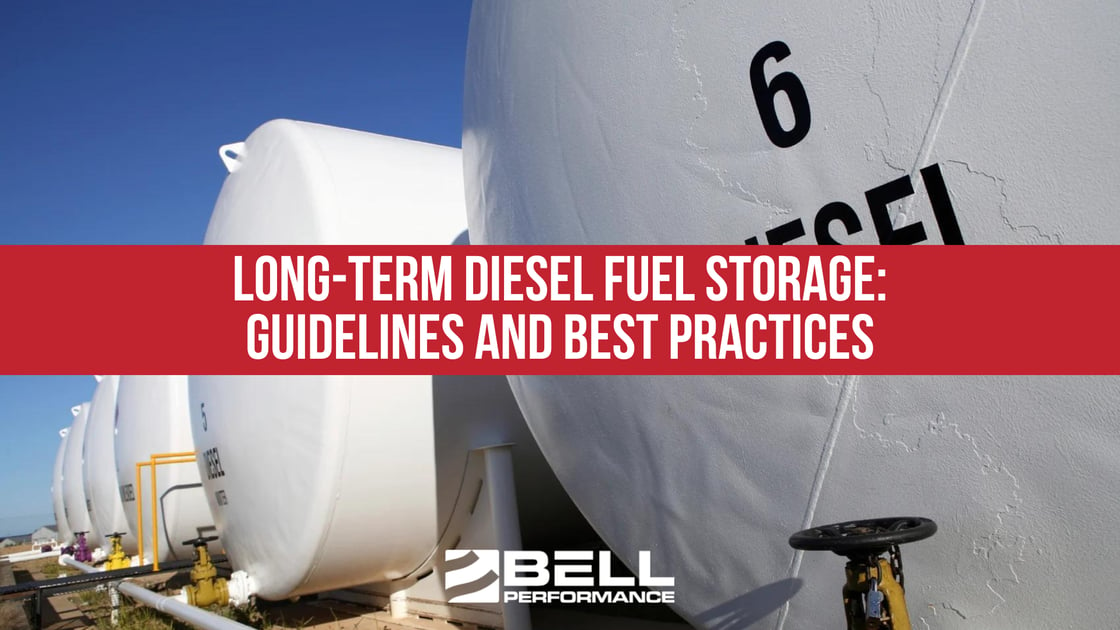
You bought diesel when prices were favorable, or you keep a storage tank full because your generator, fleet, or facility depends on it. Now the fuel has been sitting for months, and you're wondering whether it's still in good condition—or what you should have been doing to protect it.
Quick Answer
Diesel fuel stored in a cool, dry tank with minimal exposure to air and moisture will typically remain usable for 12–18 months without treatment, although fuel quality can vary depending on its original condition and storage environment. For longer storage, treat the fuel with a stabilizer such as Dee-Zol Life at the recommended 1:2000 treat rate, inspect the tank regularly for water accumulation, monitor for microbial contamination, and use a biocide such as Bellicide or Clearkill if microbial growth is detected.
That's a common concern. Today's ultra-low sulfur diesel (ULSD) doesn't store the way diesel did decades ago, and most storage-related problems begin long before they're visible. This guide explains how long diesel fuel realistically lasts, what causes it to degrade, the warning signs to watch for, and the monitoring and treatment practices that help keep stored fuel clean, stable, and ready when you need it.
Under good storage conditions—a clean, dry tank with minimal exposure to air and moisture—diesel fuel will typically remain in good condition for 12–18 months without treatment. That doesn't mean the fuel suddenly becomes unusable after that point. Rather, it means the likelihood of measurable changes in stability, oxidation, and contamination begins to increase. Storage beyond about a year is best supported with a fuel stabilizer, periodic water removal, and monitoring for microbial activity. Properly treated and maintained, stored diesel can often remain in specification for two years or more.
Two caveats are important. First, these timelines apply to conventional petroleum diesel. Biodiesel blends are inherently less stable and generally require more proactive monitoring and treatment. Second, "good storage conditions" is doing a lot of work in that first sentence. A tank that continually breathes humid air through a damaged vent cap, accumulates water, or sits partially filled with excessive headspace can experience fuel degradation much sooner than these general guidelines would suggest.
Stored diesel degrades through four primary mechanisms: oxidation from exposure to oxygen, water-related degradation as moisture enters the storage system, catalytic oxidation caused by contact with reactive metals such as copper and iron, and microbial contamination where water is present. Modern ultra-low sulfur diesel (ULSD) is generally less stable in long-term storage than the diesel fuel produced decades ago, making good storage practices more important than ever.
The refining changes that made diesel dramatically cleaner-burning also changed some of its storage characteristics. Modern ULSD is more susceptible to oxidation than earlier diesel fuels, and the low-level biodiesel content found in most on-road diesel can further reduce storage stability while increasing the fuel's affinity for water. Water is the multiplier in this equation. It accelerates fuel degradation, creates the environment microbes need to grow, and allows bacteria and fungi to establish themselves in the water phase at the bottom of the tank. Once a microbial population takes hold, it produces acids and biomass that foul filters, contribute to corrosion, and degrade both the fuel and the storage system.
One of the first visible signs of fuel degradation is a noticeable change in appearance. Fresh diesel is typically clear and bright, although its color can vary naturally. As oxidation progresses, the fuel may darken and develop suspended particles or sediment as oxidation byproducts form and insoluble materials begin to separate from the fuel. If a stored fuel sample looks noticeably different from when it was delivered, it's worth investigating further.
The storage tank itself often provides even stronger clues. Increasing water accumulation, rising sediment levels in fuel samples, and slimy deposits on tank surfaces are all warning signs that conditions inside the tank are deteriorating. That slime is often associated with active microbial contamination. Downstream, the equipment may begin telling the same story through shortened filter life, loss of power, hard starting, rough operation, or other symptoms of fuel-related problems.
One thing to know up front: severe fuel degradation is rarely reversible. Once oxidation has produced significant insoluble material or microbial contamination has become well established, additives cannot restore the fuel to its original condition. Prevention—through regular monitoring, water management, and timely treatment—is far less expensive than remediation.
Regular inspection is the foundation of good fuel management. For critical fuel systems, draw a fuel sample from each storage tank monthly and examine it for changes in appearance, including darkening, haze, suspended material, or sediment. At the same time, check for free water using water-finding paste on a tank stick or sounding tape, and remove any water that has accumulated. Even a small amount of free water can support rapid microbial growth.
Visual inspection alone, however, cannot confirm microbial contamination. Free water, fuel discoloration, and shortened filter life are warning signs, but they're only indirect evidence. The real question is whether microbial activity has reached a level that threatens fuel quality or equipment reliability. That's where routine microbial testing becomes valuable. Traditional culture-based methods often required several days to estimate microbial growth. Modern ATP-by-filtration testing provides a quantitative indication of microbial activity within minutes, making it practical to establish a testing schedule, monitor trends over time, and intervene before contamination becomes a costly problem.
Once good storage practices are in place, protecting stored diesel comes down to two complementary chemical treatments: a fuel stabilizer and a biocide. A stabilizer preserves the fuel's chemical stability during long-term storage, while a biocide eliminates microbial contamination that water management alone cannot resolve.
Fuel stabilizers such as Dee-Zol Life work on the front end. Antioxidants interrupt the free-radical chain reactions responsible for fuel oxidation, while metal deactivators reduce the catalytic effects of trace metals such as copper and iron. Treated at the recommended 1:2000 ratio, Dee-Zol Life helps preserve fuel quality during long-term storage and can extend storage life to two years or more under proper storage conditions.
Biocides address the biological side of fuel degradation. Once microbes become established in a tank, removing water alone typically won't eliminate them. Biocides such as Bellicide and Clear Kill provide the only reliable means of killing an active microbial population and are typically applied at a 1:5000 treat rate for remediation.
One practical note: mature microbial infestations often develop protective biofilms that reduce a biocide's ability to reach every organism. If heavy biofilm buildup is present, successful remediation may also require mechanical tank cleaning or the use of a biofilm dispersant such as Tank Treatment SDF to break up the biofilm and improve biocide contact.
| Application | Product | Treat Rate | Notes |
|---|---|---|---|
| Long-term diesel storage stability | Dee-Zol Life | 1:2000 | Extends storage life to 2+ years |
| Active microbial contamination (shock) | Bellicide or Clearkill | 1:5000 | EPA-registered, dual-phase biocide - Pair with water removal |
| Biodiesel blends (up to B20) in storage | Bio Dee-Zol Life | 1:1280 (1 oz per 10 gallons) | Higher blends may need increased dosing |
The storage tank and the fuel don't age independently—they function as a single system, and problems in one almost always affect the other.
The tank influences fuel condition by creating the environment in which the fuel is stored. Water enters through leaks, failed seals, inadequate vent protection, or normal condensation, while the tank's internal surfaces provide places for microbes to attach, establish biofilms, and multiply. Reactive metals such as copper and iron can also accelerate fuel oxidation. As storage conditions deteriorate, the fuel follows.
The relationship also works in the opposite direction. As fuel degrades, it begins affecting the tank itself. Microbial contamination produces organic acids and biofilms that promote corrosion, especially in the water phase at the bottom of the tank. Oxidation byproducts and accumulated sludge can foul internal surfaces, while corrosion products become additional contaminants in the fuel. Left unchecked, the result is a cycle in which deteriorating fuel accelerates tank deterioration, and a deteriorating tank further accelerates fuel degradation.
For that reason, protecting the fuel also helps protect the far more expensive storage system around it. Effective fuel management extends beyond the fuel itself to include routine inspection, water control, microbial monitoring, and maintenance of the storage tank.
Storage tanks are also subject to regulatory requirements. In the United States, a tank is generally considered an underground storage tank (UST) if 10% or more of its volume is below the surface of the ground, bringing it under EPA UST regulations as well as applicable state requirements for corrosion protection, leak detection, and spill prevention. Above-ground storage tanks (ASTs) are governed by a different set of federal, state, and local requirements. Regardless of tank type, minimizing headspace and controlling water intrusion remain among the most effective ways to reduce condensation and preserve both the tank and the fuel.

Under good storage conditions, diesel fuel will typically remain in good condition for 12–18 months without treatment. That doesn't mean the fuel suddenly becomes unusable after that point; rather, the likelihood of measurable degradation begins to increase. Storage beyond about a year is best supported with a fuel stabilizer such as Dee-Zol Life, regular water management, and microbial monitoring. Properly treated and maintained, stored diesel can remain in specification for two years or longer.
One of the first visible signs of degradation is a noticeable change in the fuel's appearance. Fresh diesel is typically clear and bright, although its color can vary naturally. As oxidation progresses, the fuel may darken and develop suspended material or sediment. The storage tank itself may also show warning signs, including increasing water accumulation, rising sediment levels, or slimy deposits associated with microbial contamination. In equipment, shortened filter life, hard starting, rough operation, or loss of power can all indicate fuel-related problems.
Severe fuel degradation is rarely reversible. Once oxidation has produced significant insoluble material or microbial contamination has become well established, additives cannot restore the fuel to its original condition. Prevention through fuel stabilization, water management, and timely biocide treatment is far more effective and economical than remediation. In severe cases, fuel polishing, tank cleaning, or fuel replacement may be necessary.
Modern ultra-low sulfur diesel (ULSD) generally has different storage characteristics than the diesel fuel produced decades ago. The refining processes used to produce ULSD, together with the low-level biodiesel content found in most on-road diesel, make the fuel more susceptible to oxidation and water-related storage problems. As a result, long-term storage requires closer attention to stabilization, water management, and microbial control than it once did.
They serve different purposes, and many long-term storage applications benefit from both. A fuel stabilizer such as Dee-Zol Life helps slow oxidation and preserve fuel quality during storage, but it does not eliminate microbial contamination. Once microbes become established in a tank, biocides such as Bellicide or Clear Kill provide the only reliable means of killing an active microbial population.
For critical fuel systems, inspect stored diesel at least monthly. Draw a fuel sample and examine it for changes in appearance, while also checking for free water using water-finding paste on a tank stick or sounding tape. Periodic microbial testing—such as modern ATP-by-filtration methods—makes it possible to monitor contamination trends and address problems before they affect fuel quality or equipment reliability.
Yes. The storage tank and the fuel function as a single system. Water and microbial contamination can promote corrosion, while microbial growth produces acids and biofilms that attack tank surfaces. At the same time, corrosion products and deteriorating tank conditions can further contaminate the fuel. Maintaining fuel quality helps protect the storage system, which is typically far more expensive to repair or replace than the fuel itself.
Protect your stored diesel before storage-related problems develop. Dee-Zol Life helps preserve fuel quality during long-term storage at the recommended 1:2000 treat rate. When microbial contamination is present, biocides such as Bellicide and Clear Kill provide the reliable kill step needed to remediate an active infestation, typically at a 1:5000 treat rate. For tanks with significant biofilm buildup, remediation may also require mechanical cleaning or the use of a biofilm dispersant such as Tank Treatment SDF to improve biocide effectiveness.
See Dee-Zol Life treat rates and order | Get Bellicide for microbial contamination
Storing fuel for emergency readiness? Bell Fuel & Tank Services can test, monitor, and maintain your stored fuel program end to end.
 Erik Bjornstad : Mar 19 2026
Discover how long diesel fuel lasts in storage, factors affecting its longevity, and essential management tips to ensure optimal performance when it...
 Erik Bjornstad : May 19 2026
Discover when to use biocides, fuel polishing, or mechanical tank cleaning for diesel storage issues. Learn about costs and effective strategies for...
 Erik Bjornstad : Nov 6 2025
Preventive fuel maintenance is crucial to avoid costly damage and downtime. Learn essential strategies to protect your stored fuel and ensure system...
Leave a Comment
Have a question or something to add? Share your thoughts below.