Many performance issues in agricultural tractors don’t begin in the engine at all. They begin in the fuel.
On farms, diesel often sits in bulk storage tanks for weeks—or even months—before it ever reaches the tractor. During that time, it is exposed to temperature swings, condensation, oxidation, and contamination. By the time that fuel reaches your machine, small problems in storage can turn into noticeable performance issues in the field.
Today, we’ll look at common diesel fuel-related problems that affect agricultural tractors—and what can be done to prevent them.
Warning Signs of Fuel-Related Problems
Fuel-related issues often develop gradually. Operators may notice subtle changes long before a major breakdown occurs. Common symptoms include:
Sludge accumulation in the storage tank
Excess smoke under load
Dark, hazy, or unstable fuel
Unusual exhaust odor
Loss of power or inconsistent RPM
Repeated filter clogging
These symptoms don’t necessarily point to mechanical failure. In many cases, they trace back to fuel quality.
What’s Happening Inside the Storage Tank?
Most diesel performance problems in farm equipment originate in the bulk storage tank—not the tractor’s onboard fuel tank. In agricultural operations, fuel may be stored for extended periods, and that storage environment has a direct impact on how the engine ultimately performs.
Over time, diesel fuel naturally oxidizes and degrades. As it ages, it can form insoluble byproducts that settle to the bottom of the storage tank as sediment or sludge. While this material does not typically corrode injectors or pumps, it can create a chain of performance issues once it enters the fuel system. Sediment can plug filters, restrict fuel flow, interfere with proper injector spray patterns, and ultimately reduce combustion efficiency. What begins as gradual fuel degradation in storage can end up showing itself as lost power or inconsistent engine response in the field.
Water intrusion is another major contributor to tractor fuel problems. Agricultural storage tanks are especially vulnerable to condensation because of seasonal temperature swings and daily heating and cooling cycles. Even small amounts of water can reduce overall fuel stability and, more importantly, create the environment necessary for microbial growth. Once water is present, it sets the stage for further fuel degradation and contamination that can steadily impact reliability if left unaddressed.
Microbial Contamination: A Hidden Cause of Tractor Downtime
A substantial percentage of recurring tractor fuel issues are directly or indirectly related to microbial contamination. In agricultural operations where fuel is stored for extended periods, this is one of the most common and least understood causes of repeated filter plugging and inconsistent engine performance.
Bacteria and fungi live at the interface between fuel and water. When water accumulates in a storage tank—whether from condensation, delivery contamination, or poor tank maintenance—microbes begin to grow and multiply. As they reproduce, they form biomass, commonly referred to as “slime.” This biomass can rapidly clog filters, increase sediment in the tank, and produce foul odors. In addition, certain microbial species generate acidic byproducts that can contribute to corrosion in the storage tank itself over time.
Unlike minor fuel instability, microbial growth does not correct itself. Once contamination begins, it continues to expand as long as water and fuel are present. That’s why mechanical filtration or standard fuel additives alone are not sufficient to eliminate an active infestation.
Products such as Bellicide and ClearKill are specifically formulated to eliminate active microbial growth in diesel fuel systems. A registered diesel fuel biocide is designed to kill bacteria and fungi at the source, interrupting their life cycle and preventing continued biomass formation. For farms storing diesel long-term, periodic biocide treatment—combined with proper water management—is often a critical part of maintaining clean fuel and preventing recurring fuel-related downtime.
Supporting Diesel Stability and Performance
Beyond controlling contamination, maintaining fuel stability is essential in agricultural operations where diesel may sit in bulk storage for extended periods. Over time, stored diesel is vulnerable to oxidation, a natural chemical process that gradually degrades fuel quality. As oxidation progresses, it can contribute to the formation of gums and deposits that interfere with injector spray patterns and combustion efficiency.
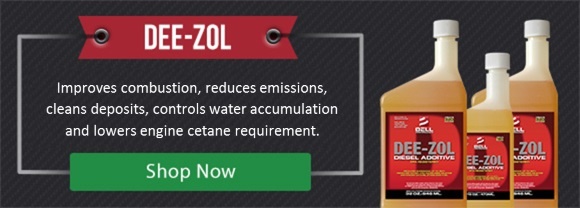
A multi-purpose diesel treatment such as DEE-ZOL is designed to address several of these fuel-related stress points at once. By supporting injector cleanliness and improving detergency, it helps maintain proper fuel atomization. Its formulation also assists with moisture management and overall fuel stability, helping reduce the conditions that lead to deposit formation and inconsistent performance.
For farms that store fuel seasonally or for long durations, DEE-ZOL Life is specifically formulated to extend the usable life of stored diesel by enhancing oxidation resistance and preserving fuel quality over time. This can be especially important in agricultural settings where equipment may sit idle between planting, spraying, and harvest cycles.
When fuel remains stable and injectors stay clean, tractors are more likely to deliver consistent power under load, smoother RPM response, and reliable fuel efficiency. Operators often experience fewer unexpected filter changes and less unplanned downtime—an important advantage during critical fieldwork windows when equipment reliability matters most.
A Preventive Approach to Tractor Fuel Management
Agricultural equipment downtime is rarely convenient—and during planting or harvest, it can be costly.
Rather than waiting for sludge accumulation, repeated filter plugging, or microbial contamination to interrupt critical fieldwork, a preventive fuel management strategy focuses on the root conditions that allow those problems to develop in the first place. That means protecting fuel stability by slowing oxidation during storage, managing water before it becomes a breeding ground for microbes, maintaining injector cleanliness so spray patterns remain efficient, and addressing microbial growth directly when it appears.
Using the appropriate combination of a fuel stabilizer, a detergent-based treatment to support injector performance, and a properly applied biocide when contamination is present helps keep both bulk storage tanks and the tractors drawing from them operating reliably. Instead of reacting to breakdowns during planting or harvest, this approach supports consistent performance and reduces the likelihood of fuel-related downtime.
When fuel is clean, stable, and free of contamination, diesel engines perform the way they were designed to—delivering consistent power, efficiency, and dependability in the field.
Discover when to use biocides, fuel polishing, or mechanical tank cleaning for diesel storage issues. Learn about costs and effective strategies for...
Preventive fuel maintenance is crucial to avoid costly damage and downtime. Learn essential strategies to protect your stored fuel and ensure system...




 Erik Bjornstad : May 19 2026
Leave a Comment
Have a question or something to add? Share your thoughts below.