


 Erik Bjornstad
Engine oil treatment - what one can and cannot do
What can an engine oil treatment do for you? Here's what they can do and what they can't.

If you’ve ever wondered why modern vehicles are so much more fuel efficient than they used to be, the answer isn’t just better engineering. We say 'just' because we just published a post talking about that very issue - how better materials and advances in technology play a key role in today's cars getting much better gas mileage than cars of before.
Quick Answer
CAFE standards are federal rules that require automakers to hit average fuel economy targets across the vehicles they sell, not on every single model. Over time, those standards have pushed manufacturers to build more efficient cars, trucks, hybrids, and EVs, which is one reason modern vehicles go much farther on a gallon of fuel than older ones did.
But it's not just technology. It’s also policy.
Over the past several decades, the U.S. government has played a major role in shaping how fuel-efficient vehicles need to be. And one of the primary tools it uses to do that is something called CAFE standards.
Most drivers have never heard of them. But they influence almost every vehicle on the road today.
CAFE stands for Corporate Average Fuel Economy.
Rather than setting a requirement for any single vehicle, CAFE standards apply to a manufacturer’s entire fleet of vehicles. Automakers are required to meet a certain average fuel economy across all the cars and light trucks they sell in a given year.
That means a company doesn’t have to make every vehicle highly efficient. But across their lineup as a whole, they need to hit an overall target when it comes to fuel economy.
If they don’t, they face financial penalties.
CAFE standards were first introduced in 1975 as part of the Energy Policy and Conservation Act.
At the time, the United States was dealing with the aftermath of the 1970s oil crisis, and there was a strong push to reduce dependence on foreign oil.
Improving vehicle fuel economy was seen as one of the most direct ways to do that.
In the early years, the standards increased gradually. But over time, especially in the late 2000s and early 2010s, the push toward higher fuel economy accelerated significantly.
The key thing to understand about CAFE is that it’s based on averages.
Automakers can balance different types of vehicles within their lineup. A company might sell larger trucks and SUVs with lower fuel economy, but offset those with smaller, more efficient cars or hybrid vehicles.
There are also credit systems built into the rules. Manufacturers can earn credits for exceeding standards in certain areas, including fuel efficiency and electrification, and apply those credits across their fleet.
This flexibility allows automakers to meet targets without making every vehicle the same, but it also creates strong incentives to improve efficiency across the board.
If you look at how vehicles have changed over time, the influence of CAFE standards becomes much clearer when you look at the numbers.
When CAFE standards were first introduced in the late 1970s, the requirements were relatively modest by today’s standards. Passenger cars were required to reach about 18 miles per gallon by 1978, rising to 27.5 MPG by the mid-1980s. That initial push led to a noticeable improvement in fuel economy, but after that, progress slowed.
For much of the 1990s and early 2000s, CAFE standards for passenger cars remained largely flat at around 27.5 MPG, while light trucks, including SUVs and pickups, were held to even lower standards, often in the range of 20 to 22 MPG. During that period, improvements in fuel economy continued, but they were incremental rather than dramatic.
That began to change in a significant way in the late 2000s.
In 2012, the federal government finalized a major update to fuel economy and greenhouse gas standards that set a much more aggressive trajectory. The goal was to reach a fleet-wide average equivalent of roughly 54.5 MPG by model year 2025.
It’s important to understand that this number doesn’t mean every vehicle would achieve 54.5 miles per gallon in real-world driving. The figure reflects a combination of fuel economy testing methods, credits, and the inclusion of hybrid and electric vehicles. In practical terms, it translated to real-world averages closer to the mid-30 MPG range for many vehicles.
Even so, the shift was substantial. Instead of relatively flat standards, automakers were now expected to improve fleet efficiency by roughly 4% to 5% per year.
That change drove a wave of innovation across the industry. Technologies that had once been optional or niche, turbocharging, advanced transmissions, hybrid systems, and improved aerodynamics, became essential tools for meeting those targets.
In other words, the rapid gains in fuel economy seen over the past decade weren’t just the result of better engineering, they were the result of more aggressive standards pushing the industry in that direction.
In more recent years, the trajectory of those standards has shifted, not by eliminating them, but by changing how quickly they increase.
Under the original 2012 framework, automakers were expected to improve fuel economy by roughly 4% to 5% per year, which put the industry on a path toward a projected fleet-wide average equivalent of about 54.5 MPG by model year 2025. Again, that figure reflected regulatory calculations rather than real-world driving, but it represented a steady and aggressive increase in efficiency requirements.
That trajectory was revised in 2020 under the Trump administration through the SAFE Rule (Safer Affordable Fuel-Efficient Vehicles Rule). Instead of continuing with roughly 5% annual increases, the updated rule reduced the required improvement rate to about 1.5% per year.
Importantly, this didn’t change a single fixed “2025 target” number. Instead, it altered the slope of the curve. By slowing the rate of increase, the expected fuel economy levels for 2025 and beyond were effectively lowered compared to the earlier projections.
In practical terms, that meant the industry was no longer on track to reach the originally projected mid-50 MPG equivalent levels by 2025. Instead, expected real-world fuel economy outcomes were closer to the high-20s to mid-30s MPG range, depending on vehicle type and manufacturer mix.
It’s also important to understand that these targets aren’t measured the way most people think. Automakers don’t “hit” a single MPG number on a specific vehicle. CAFE standards are based on a complex fleet average that includes credits, testing adjustments, and the growing influence of hybrid and electric vehicles. As a result, there isn’t a simple yes-or-no answer to whether a specific number like 54.5 MPG was achieved. What matters is the overall trend, and how quickly that trend is required to move.
Supporters of the change argued that a slower increase would help keep vehicle prices lower and avoid forcing rapid shifts in vehicle design. Critics argued that it would delay efficiency gains and increase overall fuel consumption.
Since then, fuel economy standards have continued to evolve, with later regulatory updates increasing the pace of improvement again, though not always in exactly the same form as the original 2012 targets.
Fuel economy standards continue to evolve, but the overall direction remains the same: vehicles are expected to become more efficient over time.
In the years following the SAFE Rule, regulators have increased the pace of required improvements again, setting more aggressive targets for future model years. While the exact structure and targets differ from the original 2012 framework, the broader goal of improving fleet-wide efficiency has remained in place.
At the same time, the way automakers meet those targets has changed.
Hybrid vehicles, plug-in hybrids, and fully electric vehicles now play a much larger role in helping manufacturers achieve their fleet averages. Because these vehicles either use less fuel or no gasoline at all, they can significantly raise a manufacturer’s overall efficiency rating under CAFE calculations.
That shift has had a noticeable impact on the types of vehicles being developed and marketed. Even for traditional gasoline-powered vehicles, many of the efficiency improvements now built into modern engines, such as turbocharging, advanced fuel injection, and multi-speed transmissions, are part of a broader strategy to meet evolving regulatory expectations.
For drivers, the result is a market where efficiency is no longer a niche feature, it’s built into nearly every vehicle category.
For most drivers, CAFE standards operate in the background.
You don’t see them when you walk onto a dealership lot. You don’t interact with them directly when you buy a vehicle.
But they shape what options are available.
They influence how engines are designed, how vehicles are built, and what trade-offs manufacturers are willing to make between performance, cost, and efficiency.
In many ways, they’re one of the reasons modern vehicles can deliver better fuel economy without sacrificing capability.
CAFE standards are easy to think of as just another set of government rules, something technical, distant, and largely out of sight.
But in reality, they’ve helped shape nearly every vehicle on the road today. They’ve influenced how engines are designed, how transmissions are built, how vehicles are sized and powered, and even how quickly new technologies like hybrid and electric systems have been adopted.
Many of the improvements and features we take for granted would probably not have come about if they hadn't been either pushed or required by these kind of government rules.
The next time you fill up your tank, or notice how far your vehicle goes on a gallon of fuel, you’re seeing the result of more than just engineering.
You’re seeing the result of decades of policy, pressure, and innovation all working together to shape what you drive.
And that influence isn’t going away.
If anything, it’s only becoming more important in determining what the next generation of vehicles will look like, and how they’ll perform when you get behind the wheel.

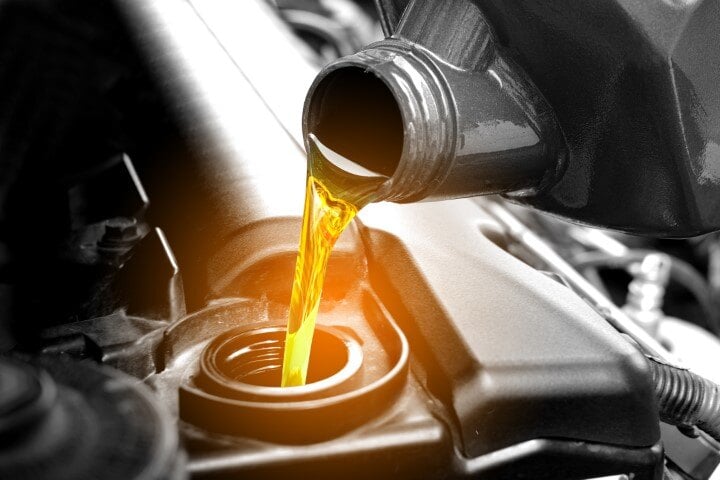
What can an engine oil treatment do for you? Here's what they can do and what they can't.

There are a number of things you can do to prevent diesel fuel from gelling to keep your engine running to its full potential.

Need to store a car for the winter? There's a lot more to it than just putting it in park - here's what you need to know about storing your car.
Leave a Comment
Have a question or something to add? Share your thoughts below.