


 Erik Bjornstad
Do Fuel Additives Really Work? How to Know
 Erik Bjornstad : Jun 18 2026
Discover how fuel additives can benefit your vehicle when matched to specific problems. Learn to assess effectiveness and make informed choices.
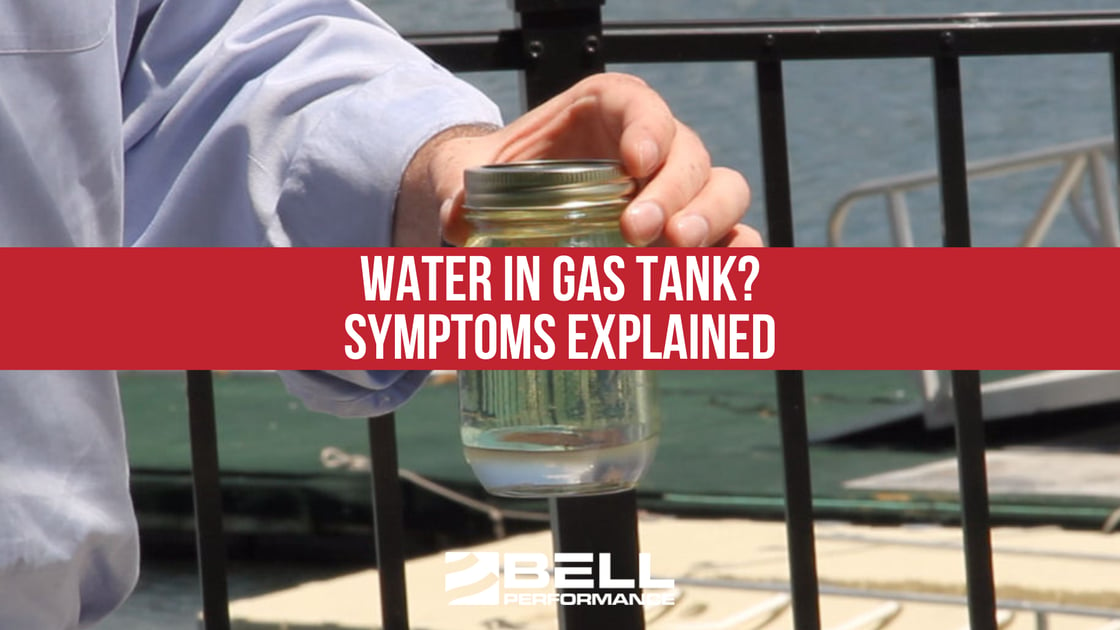
Maybe you left your gas cap off during heavy rain. Maybe the station you fueled up at had water in one of its underground storage tanks, and some of it ended up in your vehicle. It's probably not condensation—modern vehicle fuel systems are largely sealed, making condensation a much less common source of water contamination than it is in large vented storage tanks.
Quick Answer
Water in a gas tank causes sputtering, hesitation, and sudden surging—often shortly after a fill-up. Water won't vaporize and burn like gasoline, so the engine stumbles each time an injector delivers water instead of fuel. For most drivers, an alcohol-free fuel treatment like DFS Plus from Bell Performance is the most practical way to deal with small amounts of free water without draining the tank.
However it got there, water in your gas tank is a problem that should be dealt with quickly. Here's how to recognize the symptoms, what's happening inside your engine, and the most practical ways to remove the water before it causes bigger problems.
The biggest clue is a sudden change in how your vehicle runs—especially if it starts shortly after you've filled the tank. You press the accelerator, and the engine hesitates or sputters. It struggles to reach highway speed. Or it stumbles, then suddenly catches and surges forward as normal combustion returns.
Timing matters. If your vehicle was running normally before your last fill-up and the problems appeared immediately afterward, water contamination should be high on your list of possible causes.
The sputtering happens because slugs of water are being drawn into the fuel injectors instead of gasoline. Unlike gasoline, water doesn't vaporize and burn to release energy. When enough water reaches the combustion chamber, combustion is weakened or interrupted altogether, causing that cylinder to misfire. The result is hesitation, rough running, and a noticeable loss of power.
Those sudden surges happen when gasoline reaches the injector again and normal combustion resumes.
Water can also damage the fuel system over time. Gasoline provides some lubrication for fuel pumps and injectors, while water does not. Repeated exposure to water increases wear on these components, and standing water inside the fuel system can eventually lead to corrosion. Any rust or debris that forms may later clog or damage sensitive fuel system components.
Yes. All gasoline contains a small amount of dissolved water, and ethanol-blended fuels like E10 can hold somewhat more because ethanol naturally attracts water. At these trace levels, the water remains dissolved in the fuel and passes through the engine without causing noticeable problems.
The real concern is free water—water that has separated from the gasoline and settled to the bottom of the tank because it is heavier than fuel. Since the fuel pump draws fuel from near the bottom of the tank, that free water can be pulled into the fuel system in slugs, producing the sputtering, hesitation, and rough running described above. Once free water is present, continuing to drive generally won't solve the problem. The water needs to be removed or safely dispersed.
For most drivers, a quality fuel treatment is the most practical solution. While severe contamination may require draining the tank and replacing the fuel, that's rarely necessary for the small amounts of free water most motorists encounter.
Traditional fuel-drying products have been used for decades and typically rely on alcohol to absorb small amounts of water into the fuel so it can pass harmlessly through the engine. DFS Plus from Bell Performance takes a different approach. Instead of relying on alcohol, it uses specialized surfactant chemistry to control free water and help disperse it throughout the fuel. That's especially appealing for owners of older vehicles or equipment, where repeated use of alcohol-based treatments may not be desirable.
If you're dealing with water contamination in your gasoline, DFS Plus is formulated to help control free water, protect fuel system components, and reduce the corrosion problems that excess moisture can create.

It's not a good idea. Driving with free water in the fuel can cause repeated misfires, hesitation, and poor performance. Water also provides little lubrication for fuel pumps and injectors and can promote corrosion if it remains in the fuel system. The sooner you remove or treat the water, the less chance it has to cause long-term problems.
No. Water is heavier than gasoline, so free water settles at the bottom of the tank—right where the fuel pickup is typically located. It won't simply disappear from a sealed fuel system. The practical solutions are to drain the contaminated fuel or treat it with a fuel additive designed to control free water so it can pass safely through the engine.
Hesitation and sputtering during acceleration, trouble holding highway speed, and sudden surges in RPM are the classic signs—especially when they start shortly after a fill-up. The stumble happens when the injectors spray water instead of gasoline, and the surge happens when fresh fuel reaches the injector again.
A fuel drying agent controls free water by dispersing or absorbing it into the fuel so it can pass safely through the combustion process in very small amounts. Traditional products typically rely on alcohol to accomplish this. DFS Plus from Bell Performance uses alcohol-free surfactant chemistry instead, making it a good choice for older vehicles and equipment where repeated exposure to alcohol-based treatments may not be desirable.
Common sources include a gas cap left off in wet weather and contaminated fuel from a station with a failing water filter. Condensation is rarely the culprit in vehicles, since most automotive fuel tanks are sealed systems—unlike large storage tanks, which draw in humid air as they heat and cool.
Yes. Water reduces the lubricating properties of the fuel reaching the injectors and fuel pump, increasing wear over time. It can also promote corrosion inside metal fuel system components, and any rust or debris that forms may eventually clog or damage precision injectors. Removing free water promptly helps protect the entire fuel system.
 Erik Bjornstad : Jun 18 2026
Discover how fuel additives can benefit your vehicle when matched to specific problems. Learn to assess effectiveness and make informed choices.
 Erik Bjornstad : Apr 9 2026
Discover how fuel additives can enhance engine performance, improve fuel efficiency, and identify which products are effective and worth your...
Discover the key differences between ethanol and gasoline, their impact on engine performance, and tips for minimizing ethanol-related issues.
Leave a Comment
Have a question or something to add? Share your thoughts below.